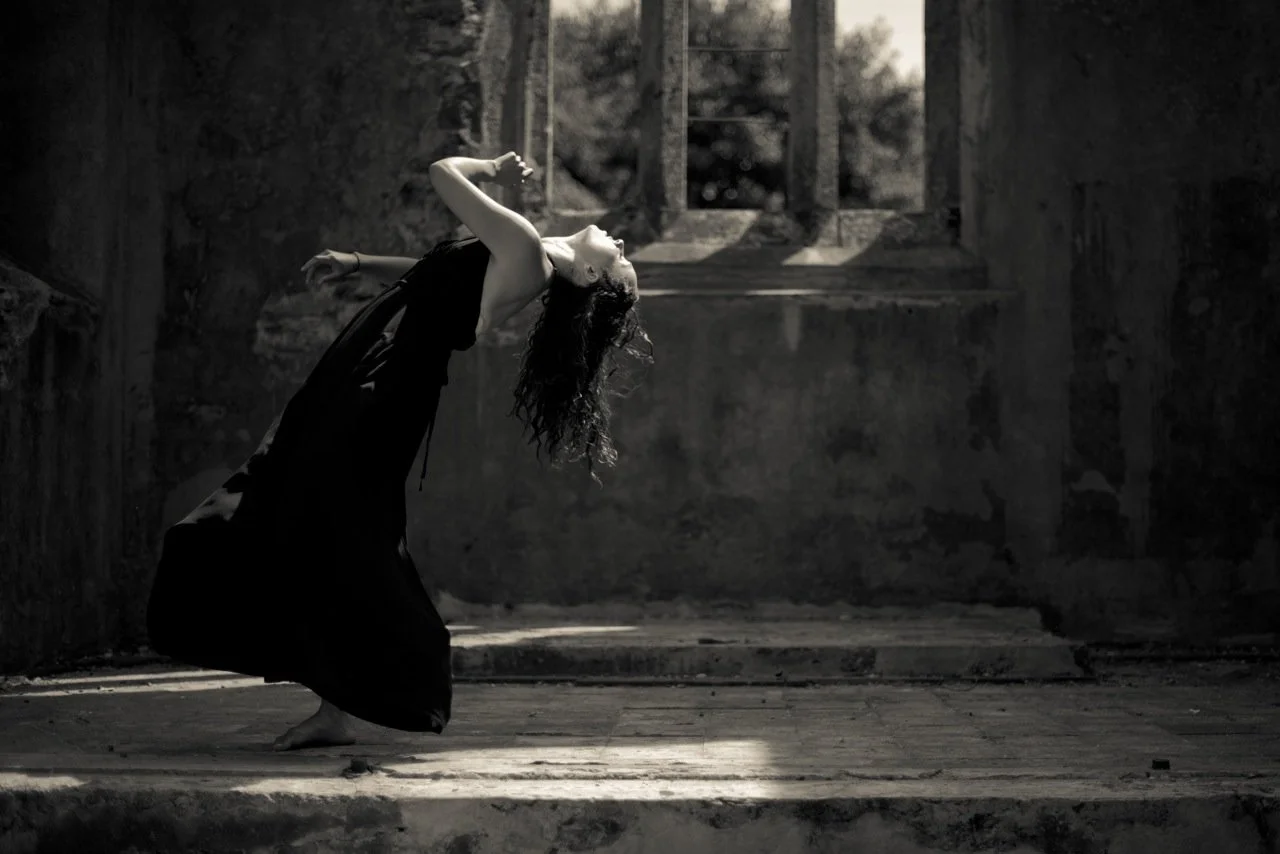
Contemporary Dance Technique
Movement Alchemy
Movement Alchemy
Fay is a movement facilitator and founded Movement Alchemy in 2024. This approach is a led and improvised codified movement exploration inspired by Fay's choreographic, anatomical and dance/yoga technique training over her life as a dancer and yoga teacher. Fay trained at Trinity Laban Conservatoire of Music and Dance in London and Bath Spa University in Bath. She later went on to train as a Yoga teacher at Triyoga in London.
This method is inspired by movement and inquiry. Expect to explore the body anatomical and how we can efficiently create movement in Space that brings sense of freedom and inner peace. This method also works with mental energy giving space for expression through the body any stories or current life situations to be brought forward into the dance.
This method is inspired by Release technique is focused on the principles of “ease of movement” and “fluidity”. Dancers learn to minimise tension in the body to create freedom of movement. The release of body weight into the floor and the use of breath to instigate movement is part of the learning process.
In dance, release technique is any of various dance techniques that focus on breathing, muscle relaxation, anatomical considerations, and the use of gravity and momentum to facilitate efficient movement.
This contemporary dance class will build on improvisation and sections of repetitive sequencing each week and will introduce the basics of movement development into free flowing sequences that explore moving in and out of the floor to beautiful soundtracks, moving dynamically with the breath.
This would suit any level from beginner to more advanced as the movement sequencing will build slowly and be open to exploration, the finer details are more about intention of movement than the external aesthetic of the body. Great for anyone looking to re-discover the simplicity of movement, its origins, or to re-find the love for dance without a competitive element but rather a inspiration intention. This class will build gentle cardiovascular health, flexibility, fitness on par with grace and power with awareness of subtlety of sensation, feeling and movement.
Space Harmony and the SACRED Geometry of the Moving Body.
In Movement Alchemy: Exploration of the Spatial Field of the Body through Improvised Movement, we enter the study of Space Harmony as both an artistic and alchemical practice—a way of perceiving and moving within the universal geometries that shape all life.
As we improvise within this framework, movement becomes both a geometric exploration and an energetic transformation. The body tunes itself to the same organising principles that guide the formation of galaxies, shells, and crystals. Through repetition and discovery, dancers cultivate spatial intelligence—an embodied knowing of how energy, intention, and alignment move through structure and void.
Through the practice of Space Harmony, Movement Alchemy becomes an inquiry into how the body mirrors the cosmos—how every turn, extension, and spiral echoes the harmonic order of creation itself. The dancer thus moves not through space, but as space—embodying the universal choreography that links matter, motion, and meaning.Movement Alchemy Contemporary Dance Class.
🕰️ Class Details
Mondays | 5:30 – 6:30 PM
📍 The Elm Grove Church, Redland, Bristol
💰 Payment Options: Close Group 8 week course 12th October - 14th of December.
✨ Step into a calm, light-filled space to reconnect body, breath, and rhythm through improvised movement.
🌀 All levels welcome — bring curiosity, water, and an open heart.
This method is inspired by Release technique is focused on the principles of “ease of movement” and “fluidity”. Dancers learn to minimise tension in the body to create freedom of movement. The release of body weight into the floor and the use of breath to instigate movement is part of the learning process.
This technique was developed in the 1980s by Joan Skinner and others. It emphasised the use of breath and the release of tension in movement. The dancer must use their body to explore the different possibilities of movement in space, such as levels, directions, and shapes. Release technique focuses on breathing, muscle relaxation, anatomical considerations, and the use of gravity and momentum to facilitate efficient movement.
REVIEWS FROM fELLOW DANCERS
“Attending Fay's contemporary dance classes has become one of the highlights of my week. It's a time when I can truly focus on myself, my body, and how it needs to move. I learn new movements and ways to express myself, while also having time to practice the beautiful sequences Fay teaches. The space itself is absolutely stunning, with perfect lighting that creates a dream-like atmosphere for letting go of anything within and simply expressing. Fay is such a kind and inspiring teacher, and the music she selects is always so immersive. The class is an uplifting, peaceful experience that allows me to rediscover the joy of movement without pressure or competition, only a genuine intention to explore.”
“I absolutely love the class. It’s become a regular self care embodied creative practice that sorts me out from niggles and keeps me feeling alive and connected. This particular style of dancing is also my favourite thing. Fay is such a gorgeous curator of offerings. Her style is inspiring, she always plays great music and the class flys by. I'd love more!”
“I love your class because of the freedom it’s given me to express myself through movement in a way that feels so authentic and elemental. I love the invitations, themes and limitations you offer us so that we have boundaries and container to create from. I didn’t expect this from them, but I have found your class to be a very supportive place for processing and re-visioning events and scenarios playing out in my life. I always leave feeling calm, connected, joyful and full of life. Thank you”